


23 April 2026
The evidence shows that it pays to be a long-term buy and hold investor
;)
Here at Optimum Path, we take an evidence-based approach to investing. So, what does the evidence tell us about long-term investing?
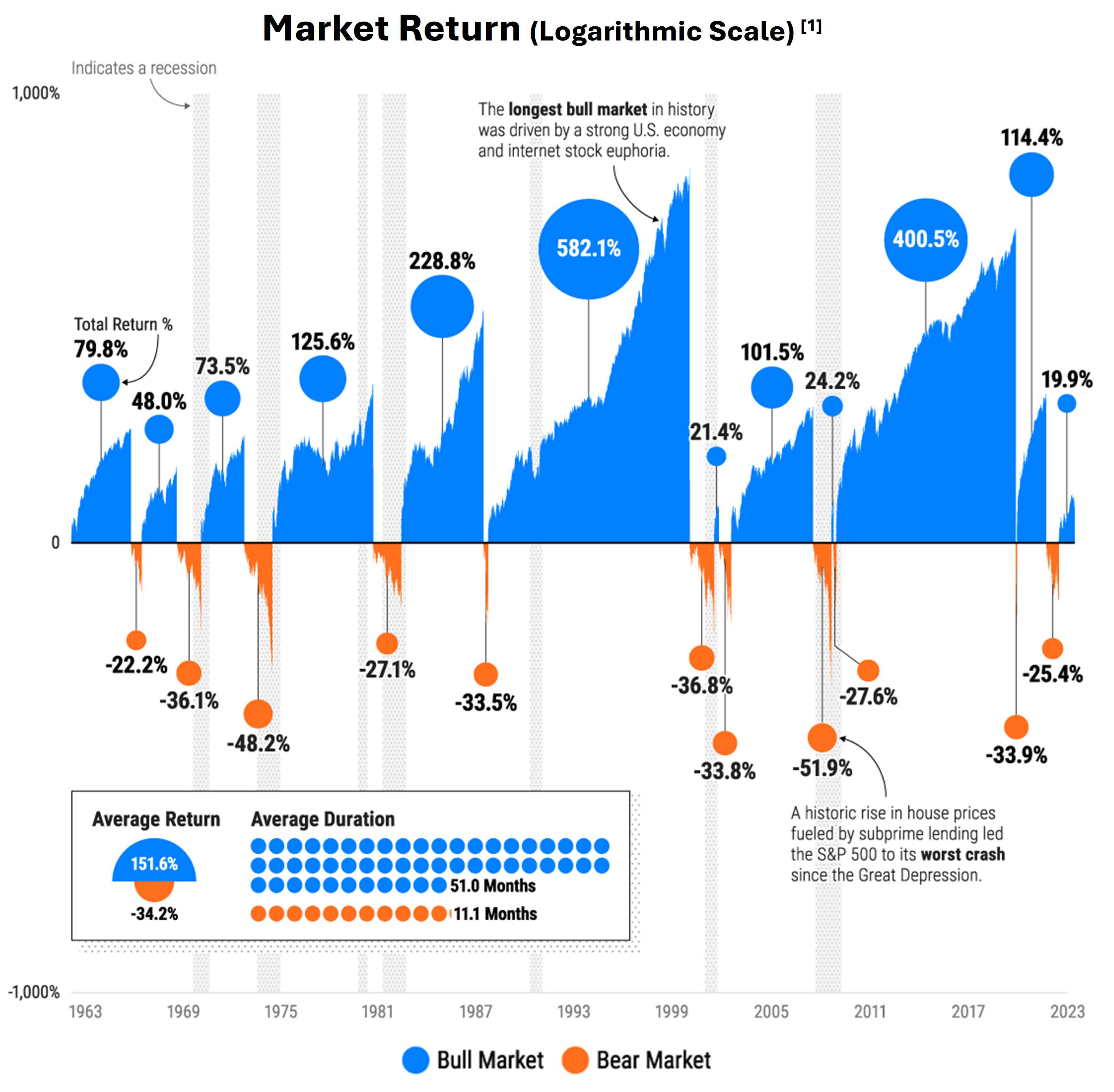
The average period of prolonged market growth is both much longer and much more pronounced than the average period of prolonged market falls
You may have heard the terms bull and bear markets. A bull market is a period of sustained market growth, while a bear market is a period of sustained market falls.
Between 1963 and 2023, the average bull market duration (in the US) was 51 months compared to 11 months for the average bear market. Bull markets were also far more powerful on average: +151.6% versus -34.2%.[2]
The result is that if you have been invested in the market historically, there’s been close to a 3-in-4 chance that you achieved a positive return in any given year – and those odds improve meaningfully when you look over longer time periods.[2]
Market timing makes surprisingly little difference when it comes to long-term returns
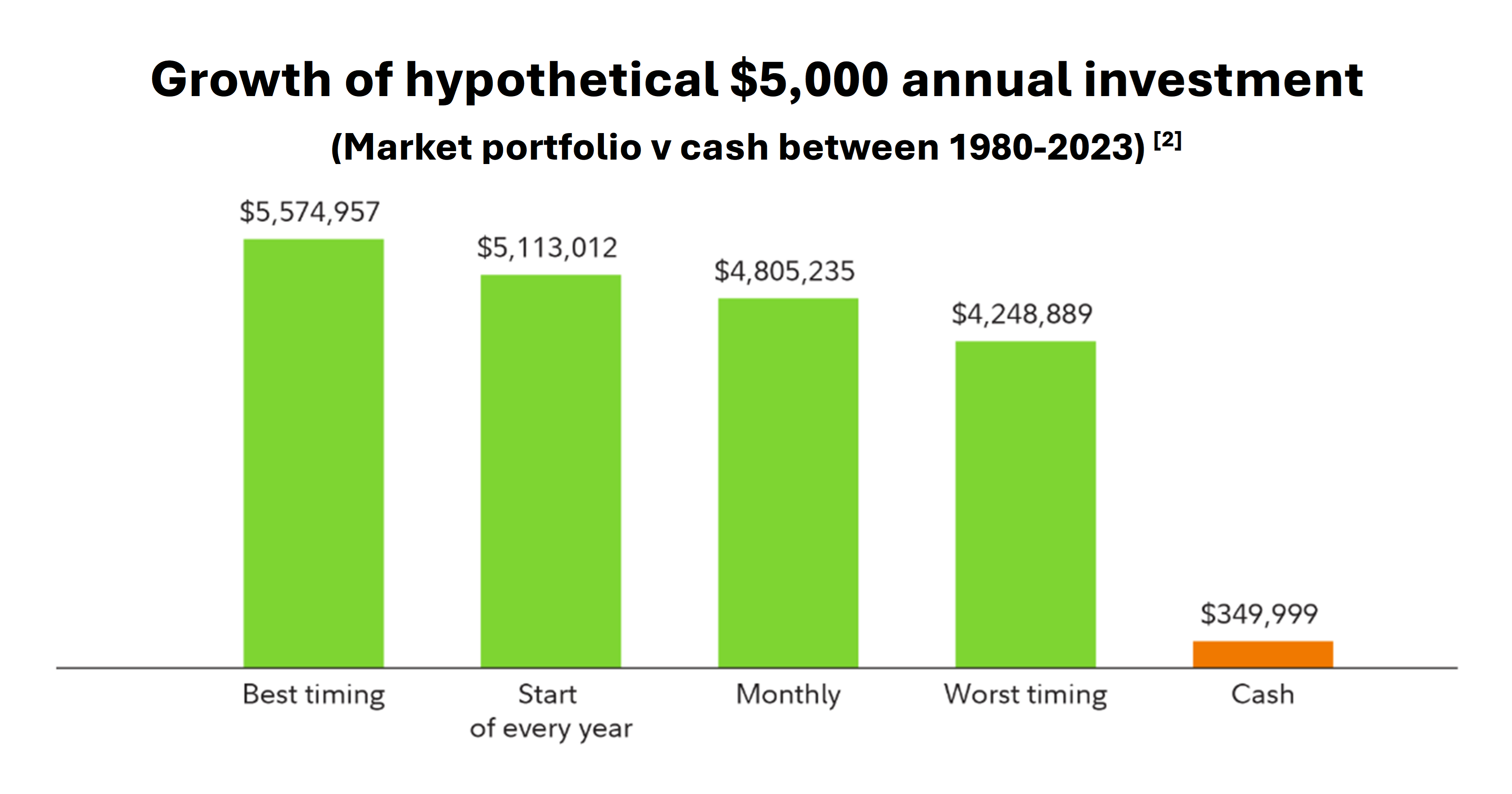
Imagine a world where you could always see a year into the future. This sounds like it would be a pretty handy superpower, and if you had $5,000 of spare money to invest each year between 1980 and 2023, you could have turned this into $5.57 million by purchasing market investments (S&P500) at the optimal point each year.[2]
For those who were not fortunate enough to be bestowed with superpowers, by simply investing this $5,000 on the first possible day each year, they could have turned this into $5.11 million. In other words, that handy superpower would only leave you with 9% more wealth than the person who simply maximised their time in the markets.[2]
In addition to this, if someone had been unfortunate enough to invest the $5,000 on the worst day of the year, each year for 43 years on the trot, they would end up with just under 12% less wealth than someone who invested the money on a monthly basis spread evenly across the year. This ‘unfortunate’ person would still have 1,114% more than an individual who invested the money into cash on a regular basis. That’s over 12 times more wealth.[2]
The cost of being out of the market for small periods adds up
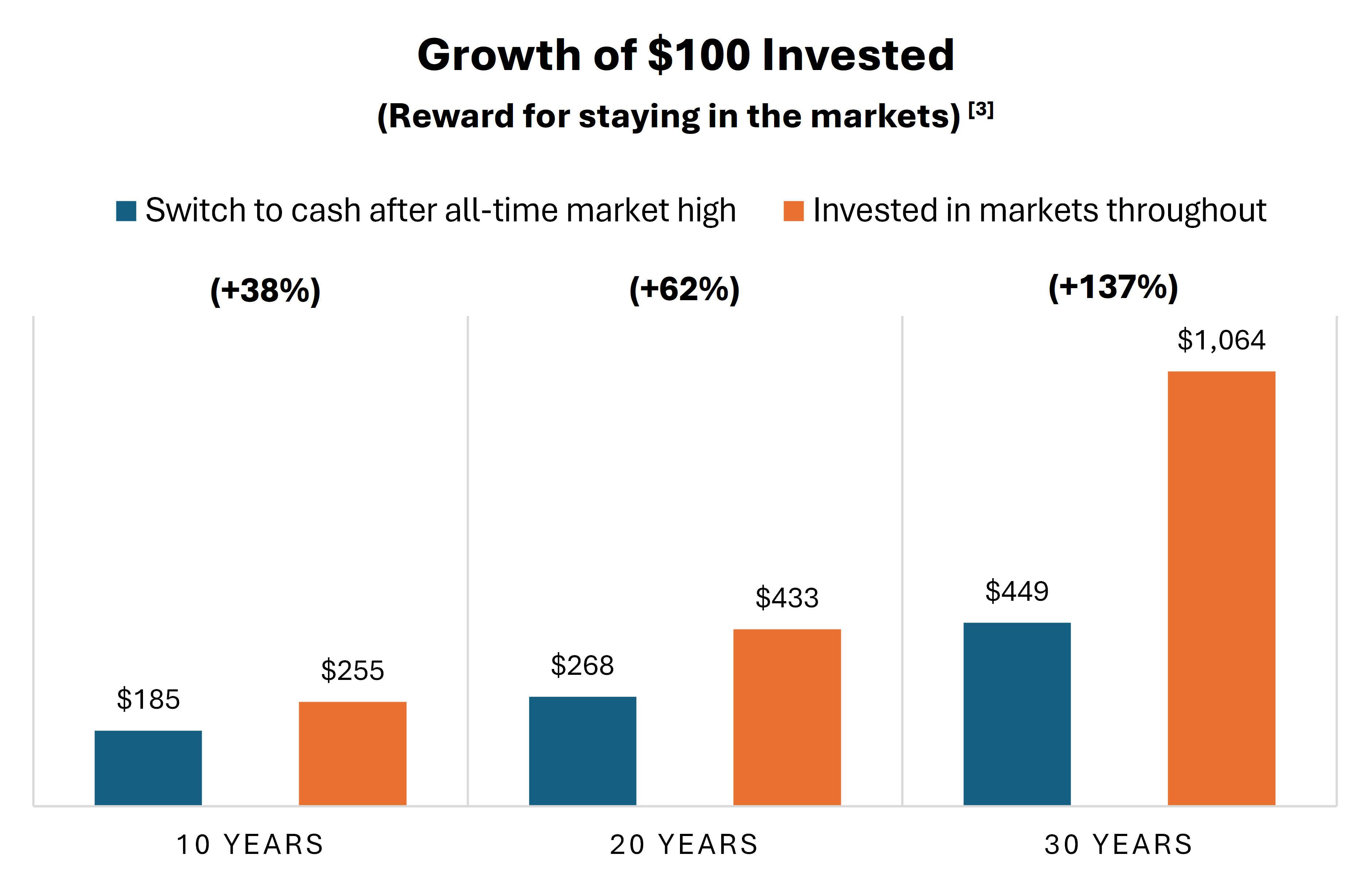
There’s always plenty of speculation about when the next market fall or correction might arrive – especially when markets hit new all-time highs. But new highs are a normal feature of markets, and taking your money out of the markets “just for a bit” can have a bigger impact on long-term returns than many people expect.
For example, if at the end of 2014 you invested $100 into the (US) market, but moved to cash for a month each time the market hit a new all-time high, your money would be worth $185 by the end of 2024 (10 years later). By comparison, simply staying invested over the same period would have left you with $255 – around 38% more.
And the gap widens over time. Over 20 years to the end of 2024, the ‘stay invested’ approach would have delivered over 60% more wealth, and over 30 years, more than double.
In conclusion – what does the evidence tell us?
In short, the best long-term outcomes have historically come, not from doing anything fancy but simply by maximising your time in the markets.
Whilst cash forms a valuable part of any financial planning strategy, in the long-term, it is likely to considerably underperform a well-diversified stock-based investment strategy, and even relatively short spells out of the market can make a noticeable difference to returns.
Please note
The data in this article is based solely on US stock market history. While the US is the largest stock market in the world, it does not represent the whole global market. That said, US market data can still provide a helpful illustration of patterns that often show up across wider stock markets.
Stock-based investments are volatile and can go up and down. Diversification of investments is vital for managing investment risk. The most appropriate asset allocation will vary from individual to individual and is something that should be discussed with a qualified expert.
Past performance is not a reliable indicator of future performance.
[1] Data from First Trust Advisors LLP., and Bloomberg. Visuals from Visual Capitalist.
[2] Data from Bloomberg Finance. Visuals from Fidelity.
[3] Data from Schroders. Visuals from Optimum Path.
Get in touch
This article is for general information only and does not constitute advice. The information is aimed at retail clients only.
All information is correct at the time of writing and is subject to change in the future.
Get in touch at hello@optimumpath.co.uk or call us on 01664 778899. You can also book a quick call directly through our website.
Category: Financial Planning, Investments